
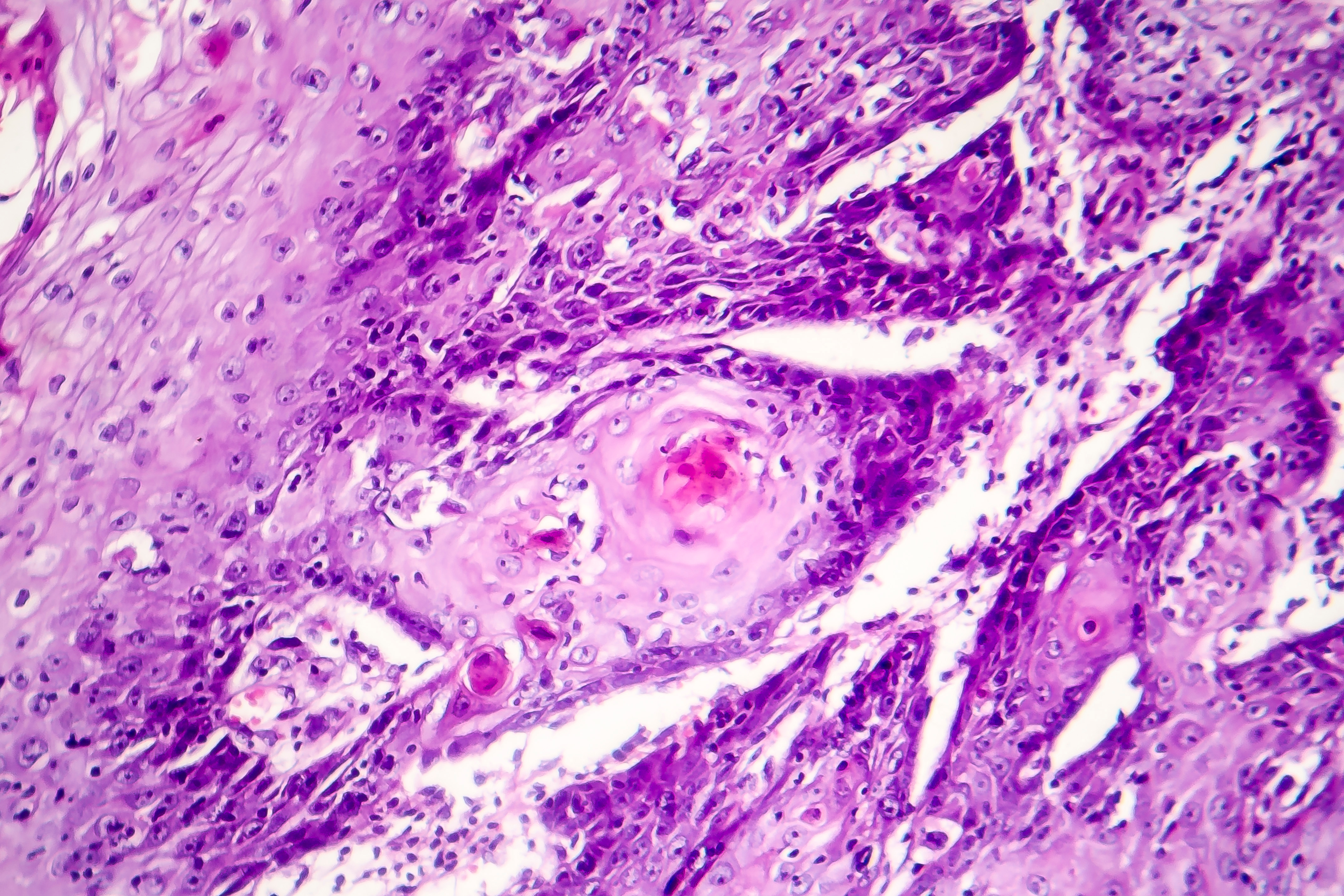
Unloxcyt (cosibelimab-ipdl) was recently approved by the FDA for the treatments of adults with metastatic or locally advanced cutaneous squamous cell carcinoma (CSCC) who are not candidates for curative surgery or curative radiation.
CSCC can be difficult to treat when surgery or radiation is not possible. Currently, doctors use medications that block a protein called PD-1 to help the immune system fight the cancer. While these treatments work for many patients, some do not respond well or experience serious side effects. Cosibelimab works by blocking PD-L1, which cancer cells use to hide from the immune system. By blocking PD-L1, cosibelimab helps activate two parts of the immune system:
- The adaptive immune system (which learns to recognize and fight specific threats)
- The innate immune system (which provides a rapid, general defense)
Cosibelimab is designed to potentially trigger additional immune responses that could help destroy cancer cells. This new approach aims to provide effective treatment while potentially reducing side effects for patients with advanced CSCC.
In a multicenter open-label trial of 109 patients with metastatic or locally advanced CSCC:
- About half of the patients (47-48%) saw their tumors shrink or disappear.
- For some patients, these positive effects lasted a long time – over 34 months in some cases.
Who Can Benefit
This treatment may help people with CSCC who:
- Have cancer that has spread to other parts of the body
- Have cancer that has grown too large to be removed by surgery
- Can’t have radiation therapy
How It’s Given
- Cosibelimab is given through an IV infusion every 3 weeks.
- Each treatment takes about 60 minutes.
- Patients continue treatment until the cancer stops responding or side effects become too severe.
Side Effects
The most common side effects included:
- Feeling tired
- Muscle or bone pain
- Skin rash
- Diarrhea
- Thyroid problems
- Constipation
- Nausea
- Headache
- Itching
- Swelling
- Infections
It’s important to discuss these potential side effects with your doctor to understand how they might affect you and how they can be managed. This new treatment offers hope for patients with advanced CSCC who have limited treatment options. If you think you might benefit from cosibelimab, talk to your oncologist about whether it could be right for you.
More Reading
Overview of Non-Melanoma Skin Cancer
Connect With Others for Support and Information
Cancer Connect was the first social network created for people with cancer. Founded by oncologists to support cancer patients and their caregivers, over 40 million individuals have accessed Cancer Connect programs since 1997. Cancer Connect is used by leading cancer centers including Dana Farber to support their patients. Share your experience, ask a question, or start a conversation by joining Cancer Connect.
Reference:
Clingan P, Ladwa R, Brungs D, et al. Efficacy and safety of cosibelimab, an anti-PD-L1 antibody, in metastatic cutaneous squamous cell carcinoma. J Immunother Cancer. 2023 Oct;11(10):e007637.


