
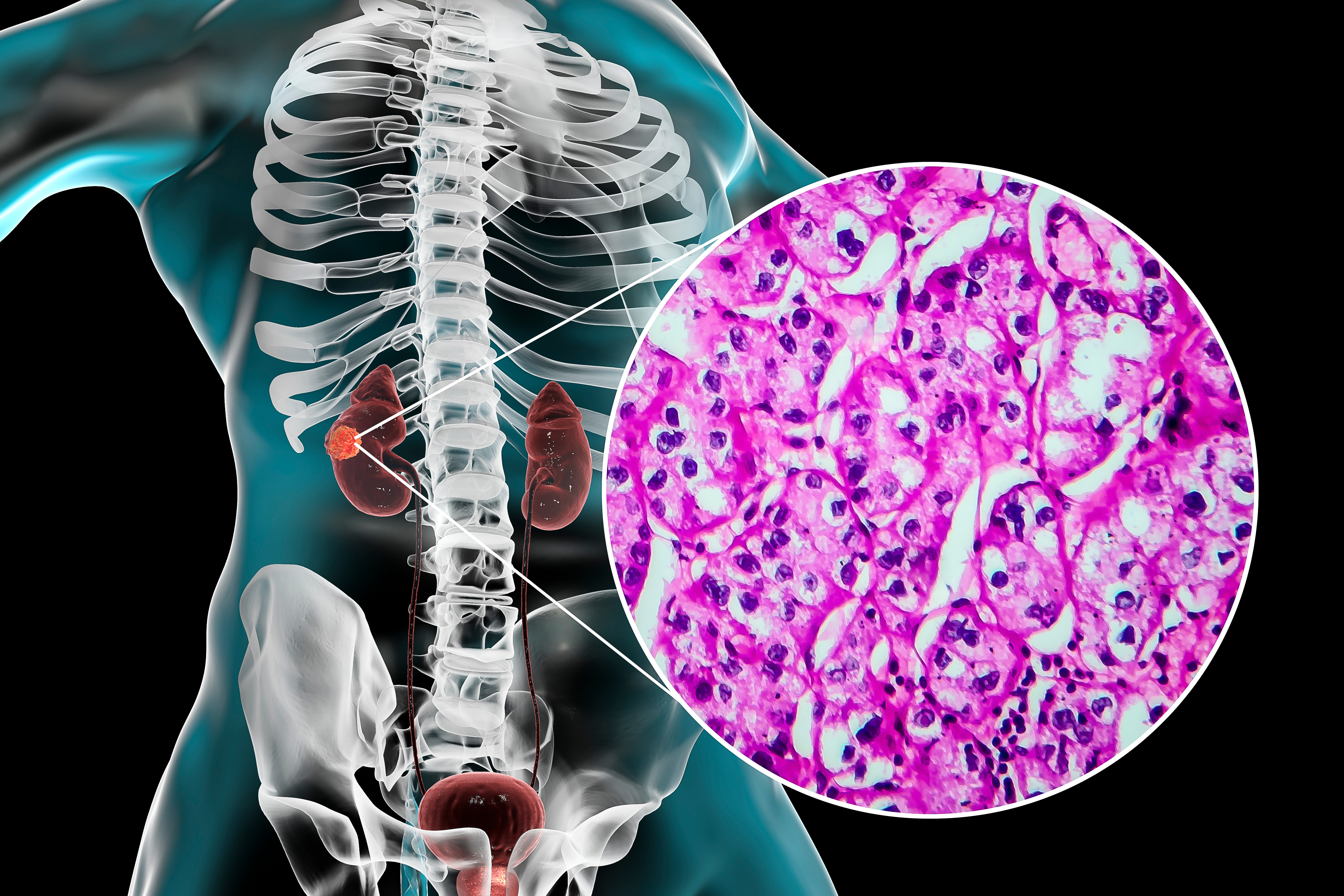
The U.S. Food and Drug Administration (FDA) has approved the combination of belzutifan (Welireg) and pembrolizumab (Keytruda) as adjuvant treatment for adults with clear cell renal cell carcinoma (ccRCC) who are at intermediate-high or high risk of recurrence following surgery. The approval provides a new option for patients whose cancer has been removed but who remain at significant risk for the disease returning in the future.
Why This Approval Matters
Surgery is often the first and most important treatment for kidney cancer. However, for some patients, surgery alone may not be enough. Even after a successful nephrectomy (the surgical removal of part or all of a kidney), the cancer can return months or years later.
Clear cell renal cell carcinoma is the most common type of kidney cancer, accounting for roughly 75% of renal cell carcinoma diagnoses. Patients with high-risk disease face a substantial chance of recurrence despite having no visible evidence of cancer after surgery.
Until now, pembrolizumab has been a standard adjuvant treatment option for some patients following surgery. The newly approved combination adds belzutifan, a targeted therapy that blocks a protein called HIF-2α, which plays an important role in the growth and survival of clear cell kidney cancer cells. Researchers hope that attacking the disease through multiple pathways may help prevent recurrence more effectively than immunotherapy alone.
Clinical Trial Results
The FDA approval was based on results from the Phase 3 LITESPARK-022 clinical trial, which enrolled 1,841 patients with clear cell renal cell carcinoma who had undergone surgery and were considered at elevated risk of recurrence. Participants were randomly assigned to receive either belzutifan plus pembrolizumab or pembrolizumab with a placebo.
The primary goal of the study was to measure disease-free survival, which tracks how long patients remain free of cancer recurrence, metastasis, or death.
In a planned interim analysis, researchers found that the combination therapy significantly improved disease-free survival compared with pembrolizumab alone. The study demonstrated a 28% reduction in the risk of recurrence, metastasis, or death among patients who received belzutifan plus pembrolizumab. Approximately 81% of patients receiving the combination remained cancer-free at 24 months, compared with 74% of those receiving pembrolizumab alone.
Researchers continue to follow participants to determine whether the treatment also improves overall survival, but this data is not yet known.
What Patients Should Know
This approval is intended for patients whose tumors contain a clear cell component and who have undergone surgery but remain at intermediate-high or high risk for recurrence. Some patients who previously had metastatic lesions surgically removed and have no evidence of disease may also be eligible.
For patients facing uncertainty after kidney cancer surgery, the approval offers an additional strategy designed to reduce the likelihood that the disease will return. However, treatment decisions remain highly individualized and should be discussed with a healthcare team familiar with the patient’s specific cancer characteristics and overall health.
Safety Considerations
As with all cancer therapies, the combination treatment carries risks that patients should understand before starting therapy.
Belzutifan includes warnings for anemia (low red blood cell counts) and hypoxia (low oxygen levels), which may require monitoring and management during treatment. The drug also carries a boxed warning regarding embryo-fetal toxicity.
Pembrolizumab, an immunotherapy, can cause immune-related side effects that occur when the immune system attacks healthy organs and tissues. These reactions can affect the lungs, liver, intestines, endocrine glands, skin, and other organs and may require prompt medical attention. Patients should speak with their oncology team about potential side effects, monitoring requirements, and strategies for managing treatment-related complications.
Looking Ahead
The approval of belzutifan plus pembrolizumab represents an important step forward in efforts to reduce kidney cancer recurrence after surgery. It is also the first FDA approval combining a PD-1 immunotherapy with a HIF-2α inhibitor in this setting.
Researchers continue to investigate how targeted therapies and immunotherapies can work together to improve outcomes for patients with kidney cancer. As longer-term follow-up data from LITESPARK-022 become available, physicians and patients will gain a clearer understanding of whether the benefits seen in disease-free survival ultimately translate into longer overall survival.
For now, the approval offers new hope for patients seeking to reduce the risk of kidney cancer returning after surgery and expands the growing number of personalized treatment options available in kidney cancer care.
References
- Choueiri TK, et al. Phase 3 LITESPARK-022 trial of adjuvant belzutifan plus pembrolizumab in patients with clear cell renal cell carcinoma at increased risk of recurrence following nephrectomy. Results reported in conjunction with FDA approval and presented at scientific meetings.
- U.S. Food and Drug Administration. FDA Approves Belzutifan With Pembrolizumab for Adjuvant Treatment of Renal Cell Carcinoma. June 12, 2026.


