
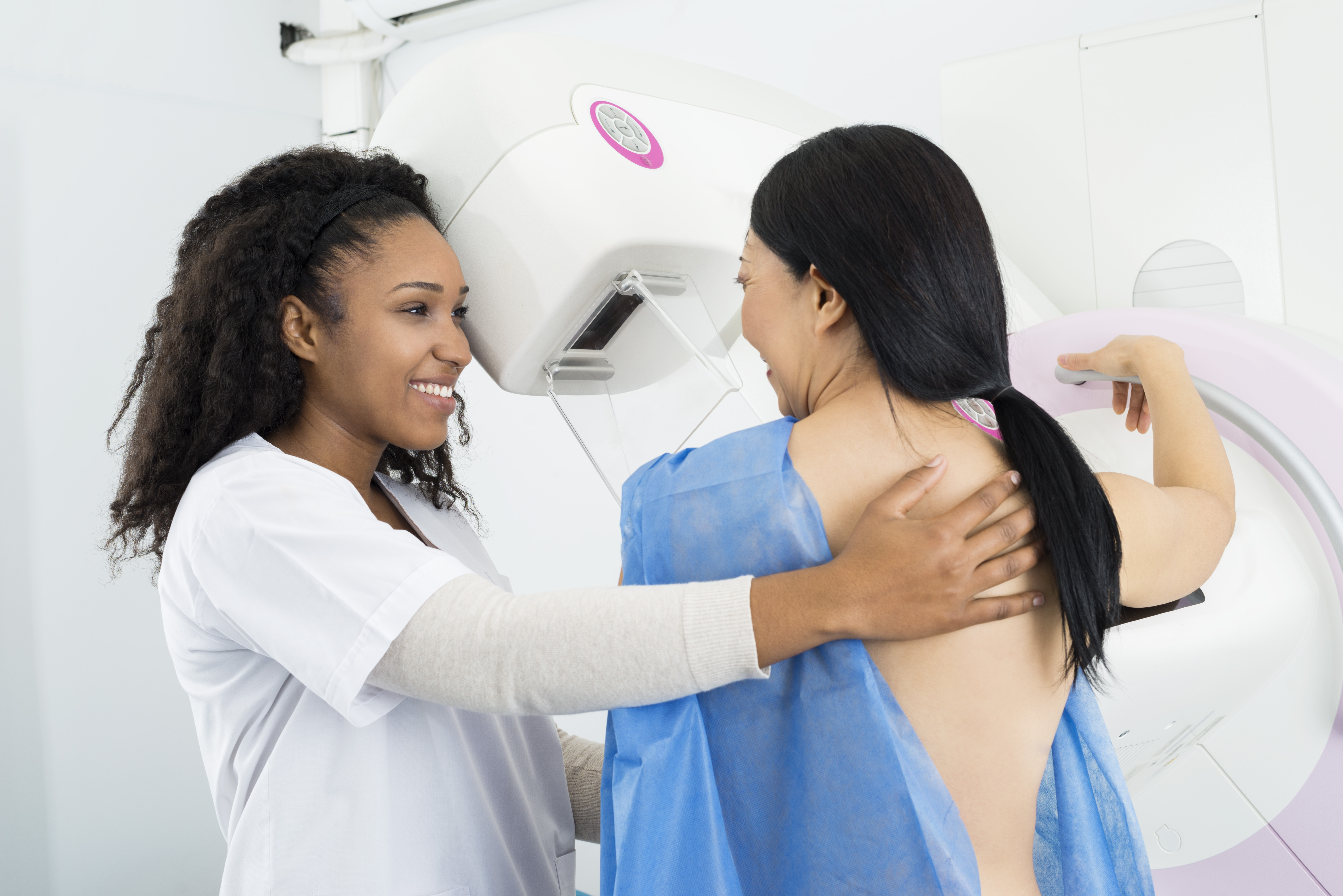
The response to the COVID-19 pandemic disproportionately impacted individuals with cancer and those at risk and the impact of the pandemic response will have long lasting effects.1-3 COVID-19 led to millions of missed screenings and tens of thousands of preventable deaths-have you caught up with your screening? The American Cancer Society and the National Comprehensive Cancer Network remind ALL Americans to resume appropriate cancer screenings and treatment to avoid excess deaths.17

The goal of cancer screening is to find disease at early stages in people who are otherwise asymptomatic—before it causes symptoms and when it may be more easily treatable. The COVID pandemic disrupted normal screening programs and many cancers continue to go undiagnosed leading to a rise in mortality from cancer – most notably for breast and colon cancers.7-12 It is estimated that the disruption of cancer screening combined with social isolation measures has significantly decreased the early detection of treatable breast, colon, and cervix cancers.13-16
Screening programs are recommended (or not), for populations as a whole, and it is important to realize that not all screening programs—or recommendations not to screen—apply to every person. People who have a high risk of a particular disease—because of a known genetic predisposition, family history, or an associated disease process—may be recommended to undergo a different regimen of testing compared with persons who are at average risk. Also, not every physician will recommend every known screening test for every suitable patient. Being aware of the current recommended guidelines for cancer screening will encourage you to stay healthy, get regular checkups, and work with your doctor (usually your primary care physician) to get appropriate screening tests.
The term screening refers to the regular use of certain examinations or tests in people who do not have any symptoms of cancer, but are at high risk for developing certain types of cancer. For many types of cancer, progress in the area of cancer screening has offered promise for earlier detection, which often results in higher cure rates.
Who should undergo screening tests for cancer?
Not everyone needs to undergo regular screening for cancer. There are many factors that determine who should be screened. Over the years, researchers have established risk factors for certain types of cancer. Risk factors are certain characteristics or exposures that make people more likely to develop a type of cancer than other people who do not have those risk factors. Risk factors are different for different types of cancer.
There are two types of risk factors: genetic factors and non-genetic (environmental) factors. A genetic factor is an inherited, unchangeable trait. A non-genetic factor is a variable in a person’s environment, which can often be changed. Non-genetic factors may include diet, exercise, or exposure to other substances present in our surroundings. These non-genetic factors are often referred to as environmental factors. Some non-genetic factors play a role in facilitating the process of healthy cells turning cancerous (i.e. the correlation between smoking and lung cancer), while other cancers have no known environmental correlation, but are known to have a genetic predisposition. A genetic predisposition means that a person may be at higher risk for a certain cancer if a family member has that type of cancer.
What types of screening tests are available for cancer?
There are many different types of screening tests designed to detect different types of cancer. Depending on the risk factors that are present, patients at a high risk for a certain type of cancer may be required to undergo any one of a number of tests. Examples of screening tests include imaging tests, such as CT scans or mammography; blood tests; or even surgical biopsy procedures. Some screening tests are non-invasive, such as diagnostic imaging, while other screening tests are more invasive, such as blood tests or colonoscopies. Screening tests are designed specifically to screen for certain types of cancer. For example, women at a high risk of developing breast cancer may need to undergo frequent mammograms, whereas individuals at a high risk for colon cancer will need to undergo colonoscopies.
Another type of screening test is predictive genetic testing. Modern technology has enabled us to identify relationships between specific genetic mutations and some cancers. As we continue to learn more about genetic mutations and identify additional mutations, the role of genetic testing will continue to grow.
Predictive genetic testing is used to determine if an individual has a genetic mutation that may predispose him/her to developing cancer. An accurate test will reveal a genetic mutation, but cannot guarantee that a person will develop cancer. Likewise, a genetic test that does not find a specific mutation cannot guarantee that an individual will not develop cancer. These tests only suggest that a person may or may not be at some level of increased risk.
Established Screening Recommendations for Cancer
Cancer screening guidelines are well defined for the early detection of several types of cancer. As researchers better define the genetics of cancer simple blood tests will likely begin to replace current protocols and early detection will begin to expand to hard to detect cancers.
Cervical Cancer
Age 25-65, women should undergo human papillomavirus (HPV) DNA test every 5 years. PAP test no longer recommended. Updated screening guidelines here.

Breast Cancer
Several organizations provide screening guidelines that are often in conflict with each other leading to confusion but in general…
Age 30
- Women should be aware of the look and feel of their breasts and report any changes to a care provider as soon as possible. Breast self-exams may help women become familiar with their breasts but are not recommended as a screening tool.
Age 40
- Women at average risk should have annual mammograms and continuing for as long as the woman is in good health. Recommendations are undergoing a bit of controversy right now-make sure you discuss with your doctor. ACS guidelines…..
Colon Cancer
Age 45, people of average risk should undergo the following:
- Fecal occult blood test (home multiple sample kit) annually
- Fecal immunochemical test (home multiple sample kit) annually Or one of these tests: Flexible sigmoidoscopy every five years Colonoscopy every 10 years Double contrast barium enema every five years Computed tomography colonography every five years Learn more about colonoscopy screening for colon cancer. In depth guidelines for colon cancer screening for average and higher risk individuals are available here.
Skin Cancer
- Regular examination of the skin by all people (as well as by their doctor during checkups) will increase the chance of finding skin cancers early. Monthly self-examination of skin will make people familiar with their own natural pattern of moles and birthmarks and help them find any change in skin lesions, which should be reported to a doctor. Regular skin checks by a doctor are indicated for people who already had skin cancer. Take control and self screen for skin cancer.
Lung Cancer
- Individuals at risk of developing lung cancer should undergo regular evaluation with low dose CT scanning. Learn more.
Oral Cancers
- Visual screening for oral cancers should be considered in high risk individuals. Learn more.
Screening in High Risk Individuals
Pancreatic cancer has been a recalcitrant disease to treat, as most patients are diagnosed with advanced disease and not amenable to surgical resection. As has been the case with other cancers such as breast and colon cancer, early detection is key to improved outcomes. It is time for increased attention to new, more effective strategies for early detection of pancreatic cancer and to better determine who is at elevated risk. Learn more about advances in the early detection of pancreatic cancer.
Bladder cancer screening can be useful for selected individuals at higher risk. Learn more here.
Resources:
Connect With Others for Support and Information
CancerConnect was the first social network created for people with breast cancer. Founded by oncologists to support myeloma patients and their caregivers, over 40 million individuals have accessed CancerConnect programs since 1997. CancerConnect is used by leading cancer centers like Dana Farber, Roswell Park and The James at Ohio State to support their patients. Join the conversation, ask questions, share your experience, and learn how the best cancer centers are treating breast cancer from others. Share your experience, ask a question, or start a conversation by posting on CancerConnect.
References:
- The Impact of COVID-19 on Cancer Screening: Challenges and Opportunities.
- Siegel R, Miller K, Jemal A. Cancer statistics, 2020. CA Cancer J Clin. 2020 Jan;70(1):7–30. doi: 10.3322/caac.21590.
- COVID-19 forecasts. Centers for Disease Control and Prevention. 2020. [2020-09-01].
- Ren X, Chen B, Hong Y, Liu W, Jiang Q, Yang J, Qian Q, Jiang C. The challenges in colorectal cancer management during COVID-19 epidemic. Ann Transl Med. 2020 Apr;8(7):498–498. doi: 10.21037/atm.2020.03.158. doi: 10.21037/atm.2020.03.158.
- CovidSurg Collaborative Elective surgery cancellations due to the COVID-19 pandemic: global predictive modelling to inform surgical recovery plans. Br J Surg. 2020 Jun 13;107(11):1440–1449. doi: 10.1002/bjs.11746.
- American Association for Cancer Research COVID-19 Hits Cancer Research Funding. Cancer Discov. 2020 Apr 24;10(6):756–756. doi: 10.1158/2159-8290.cd-nd2020-007.
- Institute of Medicine (US) and National Research Council (US) National Cancer Policy Board. Curry Susan J, Byers T, Hewitt M. Fulfilling the Potential of Cancer Prevention and Early Detection. Washington DC: National Academies Press (US); 2003.
- Myers ER, Moorman P, Gierisch JM, Havrilesky LJ, Grimm LJ, Ghate S, Davidson B, Mongtomery RC, Crowley MJ, McCrory DC, Kendrick A, Sanders GD. Benefits and Harms of Breast Cancer Screening: A Systematic Review. JAMA. 2015 Oct 20;314(15):1615–34. doi: 10.1001/jama.2015.13183.
- Ladabaum U, Mannalithara A, Meester RG, Gupta S, Schoen RE. Cost-Effectiveness and National Effects of Initiating Colorectal Cancer Screening for Average-Risk Persons at Age 45 Years Instead of 50 Years. Gastroenterology. 2019 Jul;157(1):137–148. doi: 10.1053/j.gastro.2019.03.023.
- The American Society of Breast Surgeons. 2020. Mar 26, [2020-09-01].
- Falco M. Common questions about the new coronavirus outbreak. American Cancer Society. 2020. Oct 12, [2020-10-19].
- ASCCP interim guidance for timing of diagnostic and treatment procedures for patients with abnormal cervical screening test. American Society for Colposcopy and Cervical Pathology. 2020. Mar 19, [2020-09-01]
- ASBrS and ACR joint statement on breast screening exams during the COVID-19 pandemic. The American Society of Breast Surgeons. 2020. Mar 26, [2020-09-01].
- Falco M. Common questions about the new coronavirus outbreak.. American Cancer Society. 2020. Oct 12, [2020-10-1
- ASCCP interim guidance for timing of diagnostic and treatment procedures for patients with abnormal cervical screening test. American Society for Colposcopy and Cervical Pathology. 2020. Mar 19, [2020-09-
- Preventive cancer screenings during COVID-19 pandemic. Epic Health Research Network. 2020. [2020-09-01]
- https://www.nccn.org/about/news/newsinfo.aspx?NewsID=2553


