
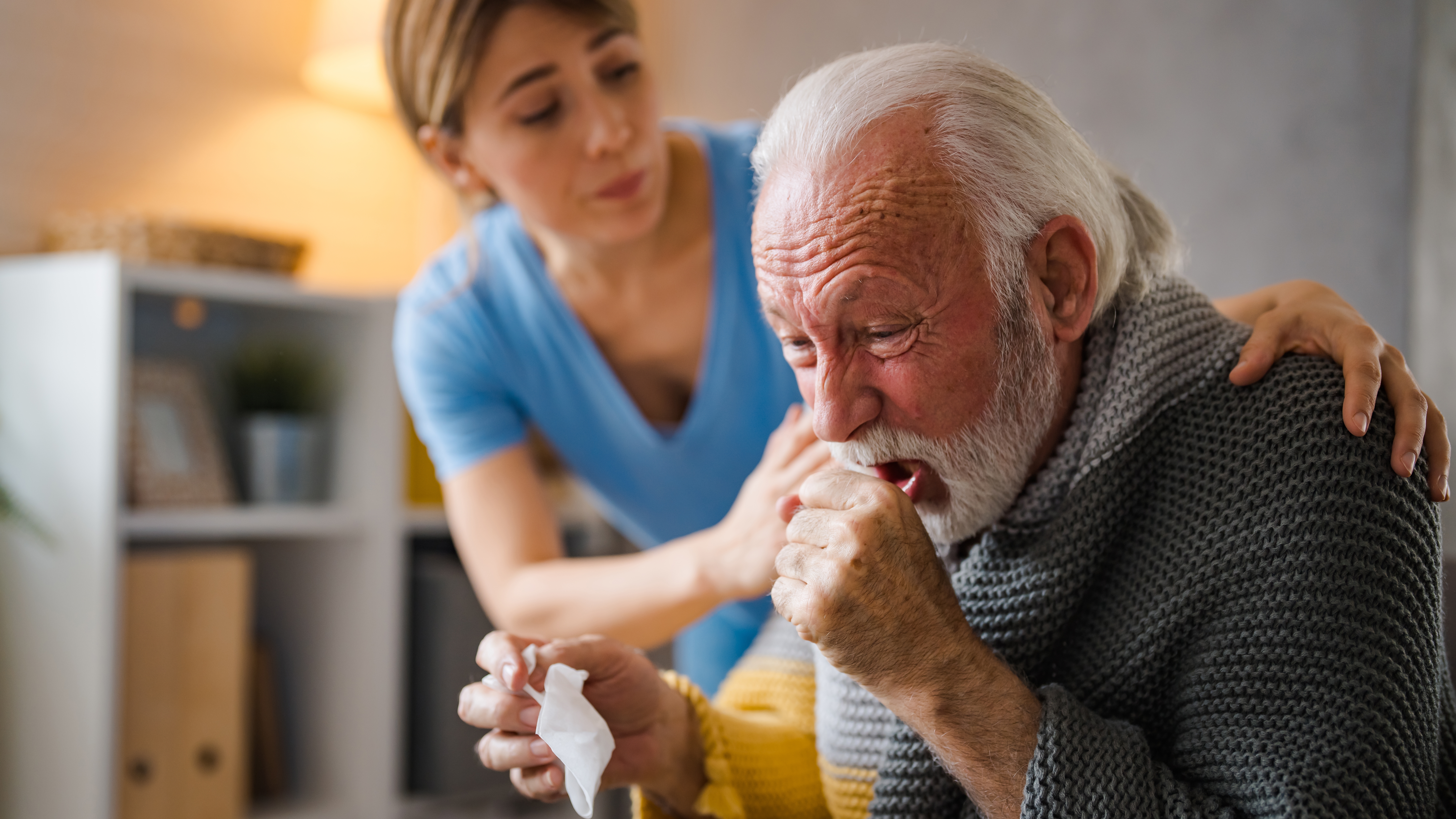
Respiratory syncytial virus (RSV) is a single stranded RNA common, contagious respiratory virus that affects the lungs and breathing passages. It causes bronchiolitis in infants, common colds in adults, and severe respiratory illnesses like pneumonia in the elderly and individuals who are immunocompromised. A vaccine is available for at risk individuals.
The virus is transmitted through the eyes or nose, infecting epithelial cells of the upper and lower airway, leading to inflammation, cell damage, and airway obstruction.
RSV typically causes mild, cold-like symptoms in most people, including:
- Runny nose
- Cough
- Fever
- Sore throat
- Headache
- Fatigue
The virus spreads through:
- Respiratory droplets from coughing and sneezing
- Close contact with infected individuals
- Touching contaminated surfaces
High-Risk Groups
While RSV can affect anyone, certain groups are at higher risk for severe infection:
- Infants, especially those under 6 months
- Premature babies
- Children under 2 years old
- Older adults (65+)
- People with weakened immune systems or chronic heart/lung conditions
Complications and Severity
In severe cases, RSV can lead to:
- Bronchiolitis (inflammation of small airways)
- Pneumonia
- Difficulty breathing
- Dehydration
Prevention and Treatment
Prevention methods include:
- Frequent handwashing
- Avoiding close contact with sick individuals
- Cleaning frequently touched surfaces
There is no specific treatment for RSV. Care typically focuses on managing symptoms through:
- Rest
- Hydration
- Over-the-counter fever reducers
- Nasal suctioning for infants
Severe cases may require hospitalization for oxygen, IV fluids, or breathing support.
Vaccines and Immunizations
Recently, vaccines and immunizations have become available for certain groups:
- RSV vaccines for adults 60+
- Maternal RSV vaccine to protect newborns
- Monoclonal antibody immunization for infants and some young children
Unlike the Covid and flu shots, the RSV vaccine is mainly administered to infants and adults ages 60 and older who are at a higher risk of severe outcomes from the condition.
Infants younger than 8 months old should receive the RSV vaccine if they’re born during this RSV season, which typically begins in October and ends in March, or are entering their first RSV season.1
The newest updates on the recommendations for adults who should receive the new RSV vaccine are:
- Anyone aged 75 and older should get the vaccine.
- Those between the ages of 60 and 74, should receive the RSV vaccine only if they have certain chronic medical conditions like heart disease or lung disease, or are living in nursing homes.
This recommendation is for adults who did not get an RSV vaccine last year. The RSV vaccine is not currently an annual vaccine, meaning people do not need to get a dose every RSV season according to the CDC.
More Reading
- Flu Shot 101 – What You Need to Know for the Influenza Season
- Embracing Radiance: How You Can Nurture Your Well-Being Amidst a Cancer Diagnosis
Connect With Others for Support and information
Cancer Connect was the first social network created for people with cancer. Founded by oncologists to support cancer patients and their caregivers, over 40 million individuals have accessed Cancer Connect programs since 1997. Cancer Connect is used by leading cancer centers including Dana Farber to support their patients. Join the conversation, ask questions, share your experience, and learn how the best cancer centers are treating cancer from others. Share your experience, ask a question, or start a conversation by posting on Cancer Connect.
References


