
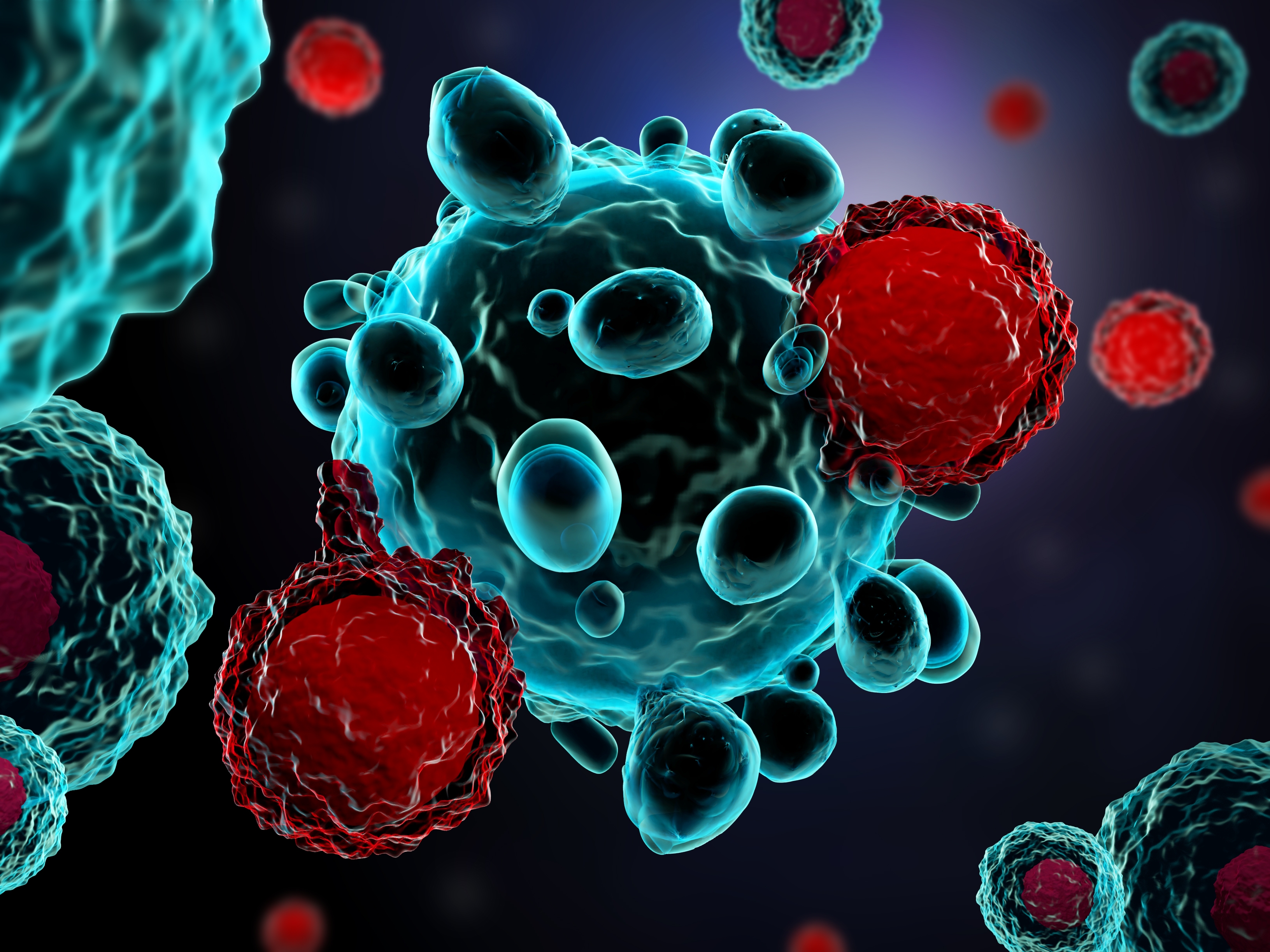
Neoadjuvant immunotherapy has shown remarkable promise for patients with dMMR (mismatch repair-deficient) colon cancer, significantly improving the chances of achieving a complete pathological response and prolonging survival. In a recent phase 2 study, the combination of nivolumab plus ipilimumab given before surgery in treatment-naive patients with locally advanced dMMR colon cancer resulted in an acceptable safety profile and a high response rate.
Microsatellite instability (MSI) is the condition of genetic hypermutability or a predisposition to mutations in cells that results from the bodies impaired DNA mismatch repair (MMR) mechanism. DNA MMR is an essential function and the way the body naturally corrects errors that spontaneously occur during cell division associated DNA replication.
Efficacy
- The NICHE-2 trial showed a 98% pathological response rate in patients treated with neoadjuvant nivolumab plus ipilimumab
- 95% of patients achieved a major pathological response (MPR), defined as ≤10% residual viable tumor
- 68% of patients achieved a pathological complete response (pCR), meaning no viable tumor cells remained
At 26 months follow-up, no patients on the study experienced disease recurrence and no patients discontinued treatment due to side effects.
Comparison to Traditional Approaches
Immunotherapy is particularly effective in dMMR tumors because dMMR tumors have a high mutational burden, creating many neoantigens that can be recognized by the immune system. Neoadjuvant immunotherapy shows vastly superior results compared to traditional chemotherapy with only 7% of dMMR tumors demonstrating pathological responses to neoadjuvant chemotherapy in the FOxTROT study.
Ongoing Research
Several studies are exploring different immunotherapy combinations:
- The NICHE-3 study is investigating nivolumab plus relatlimab, showing a 97% pathological response rate and 68% pCR rate
- Other trials are exploring single-agent PD-1 inhibitors like dostarlimab, which has shown promising results in rectal cancer
What This Means for Patients with Localized dMMR/MSI Colon Cancer
These high response rates to neoadjuvant immunotherapy in this patient population could lead to significant changes in treatment approaches:
- Potential to avoid or reduce the need for surgery in some patients
- Possibility of organ preservation in certain cases
- Reduced need for adjuvant chemotherapy, potentially improving quality of life
Patients with locally advanced dMMR colon cancer should discuss with their oncologists whether they might be a candidate for similar immunotherapy approaches in clinical trials or as part of their treatment plan.
More Reading
Understanding MSI-High and DNA Mismatch Repair (dMMR)
Immunotherapy Combination Shows Promise for dMMR Colon Cancer
Ask the Experts About Circulating Tumor DNA in the Management of Cancer
Connect With Others for Support and Information
Cancer Connect was the first social network created for people with cancer. Founded by oncologists to support cancer patients and their caregivers, over 40 million individuals have accessed Cancer Connect programs since 1997. Cancer Connect is used by leading cancer centers including Dana Farber to support their patients. Share your experience, ask a question, or start a conversation by joining Cancer Connect.
Reference
Chalabi M, Verschoor YL, Tan PB, et al. Neoadjuvant Immunotherapy in Locally Advanced Mismatch Repair-Deficient Colon Cancer. N Engl J Med. 2024 Jun 6;390(21):1949-1958.
Morton D, Seymour M, Magill L, et al; FOxTROT Collaborative Group. Preoperative chemotherapy for operable colon cancer: mature results of an international randomized controlled trial. J Clin Oncol. 2023;41(8):1541-1552.


