By Kristina Marusic
We’re exposed to dozens of chemicals on a daily basis that raise our cancer risk. Most of these exposures happen at very low levels, but research increasingly suggests that they add up and combine in ways that significantly increase our overall cancer risk1.
We encounter these chemicals in the food we eat, the water we drink, the air we breathe, the makeup and beauty products we use, and in the buildings we spend our time in.
Some of these chemicals are known carcinogens, like nitrates and nitrites in processed meats like hot dogs, ham, and sausages, and formaldehyde in certain shampoos, soaps, and hair straighteners. Many others are referred to as endocrine disrupting chemicals, which disrupt the body’s normal hormonal processes and are linked to a long list of health problems, including hormone-associated cancers like prostate cancer2 and breast and ovarian cancer.3
For example, food is frequently contaminated with endocrine-disrupting PFAS (per- and polyfluoralkyl substances), commonly referred to as “forever chemicals,” because they don’t break down and can accumulate in the environment and in our bodies. Exposure to PFAS is linked to breast cancer, kidney cancer, and testicular cancer.
PFAS make their way into our foods through contact with to-go wrappers and containers treated with the chemicals to make them water-proof and grease-proof, like the paper underneath a pizza, the paper wrappers used for bakery treats, and the to-go paper boxes at many salad bars4. PFAS are also found in the lining of microwave popcorn bags, and wind up in our produce, meat, and dairy products from PFAS-contaminated soil and animals exposed to the chemicals.5
Chemicals that raise our cancer risk have also been showing up in American tap water, including hexavalent chromium (made famous by Erin Brockovich), nitrate, and chloroform. Experts have warned that contaminated drinking water—most of which currently meets legal quality standards—could cause an estimated 100,000 cancer cases in the U.S.6
Air pollution in both rural and urban areas can expose us to chemicals that raise our risk, including diesel particulate matter, formaldehyde, and benzene, among others. Research has shown that in polluted urban areas, reducing air pollution could do as much as completely eliminating smoking would to lower rates of the 12 types of cancer most commonly associated with smoking, which include lung cancer, stomach cancer, kidney cancer, bladder cancer, pancreatic cancer, liver cancer, cervical cancer, oral cancer, colon cancer, esophageal cancer, cancer of the larynx and acute myeloid leukemia7.
Many harmful chemicals that are banned in other parts of the world are still permitted in cosmetics and personal care products sold in the US. The EU has banned or restricted more than 1,300 chemicals in cosmetics, while the US has regulated just 118. These include substances like phthalates, coal-tar dyes and parabens. Many cleaning products, soaps, and detergents contain a long list of similarly harmful chemicals.
The buildings we spend our days and nights in are typically built with materials that contain numerous carcinogens, many of which make their way into our bodies. These include chemicals like asbestos (which is still technically legal in the US), heavy metals, and 1,4-Dioxane.
Children and babies are particularly vulnerable to these exposures, which they may get substantial doses of at daycares or schools that use pesticides and harsh cleaning products.
Unlike prescription drugs and vaccines, which are carefully screened for safety, most widely used chemicals have never been tested for safety or toxicity. US agencies test less than 1% of new chemicals introduced to the market for safety9.
Even when they’re tested and found to be harmful, most of the manufactured chemicals that are known to be human carcinogens are still sold today — in fact, only five hazardous chemicals have been removed from U.S. markets in the past fifty years.
There are some steps you can take to reduce your exposures to these chemicals. You can eat organic foods when they’re accessible, use a high-quality water filter at home, and run an air purifier at home periodically, particularly on poor air quality days. You can find less-toxic personal care and cleaning products using online tools like the Environmental Working Group’s Healthy Living App, and use resources like those provided by organizations like the Healthy Building Network to source safer materials for your next home or office renovation project. You can choose a daycare that’s been endorsed as nontoxic by a third-party program like the Eco-Healthy Child Care program or encourage your existing daycare to get certified, and you can encourage your local schools to minimize kids’ harmful exposures by using resources like the EPA’s Healthy Schools Checklist.
The US lags behind many other countries when it comes to regulating chemicals that raise our cancer risk. We can also better protect ourselves and our families from these harmful exposures by telling our local, state, and federal lawmakers that we want better protections against cancer-causing chemicals, voting in favor of better chemical regulation when it’s on the ballot, and encouraging our friends and loved ones to do the same.
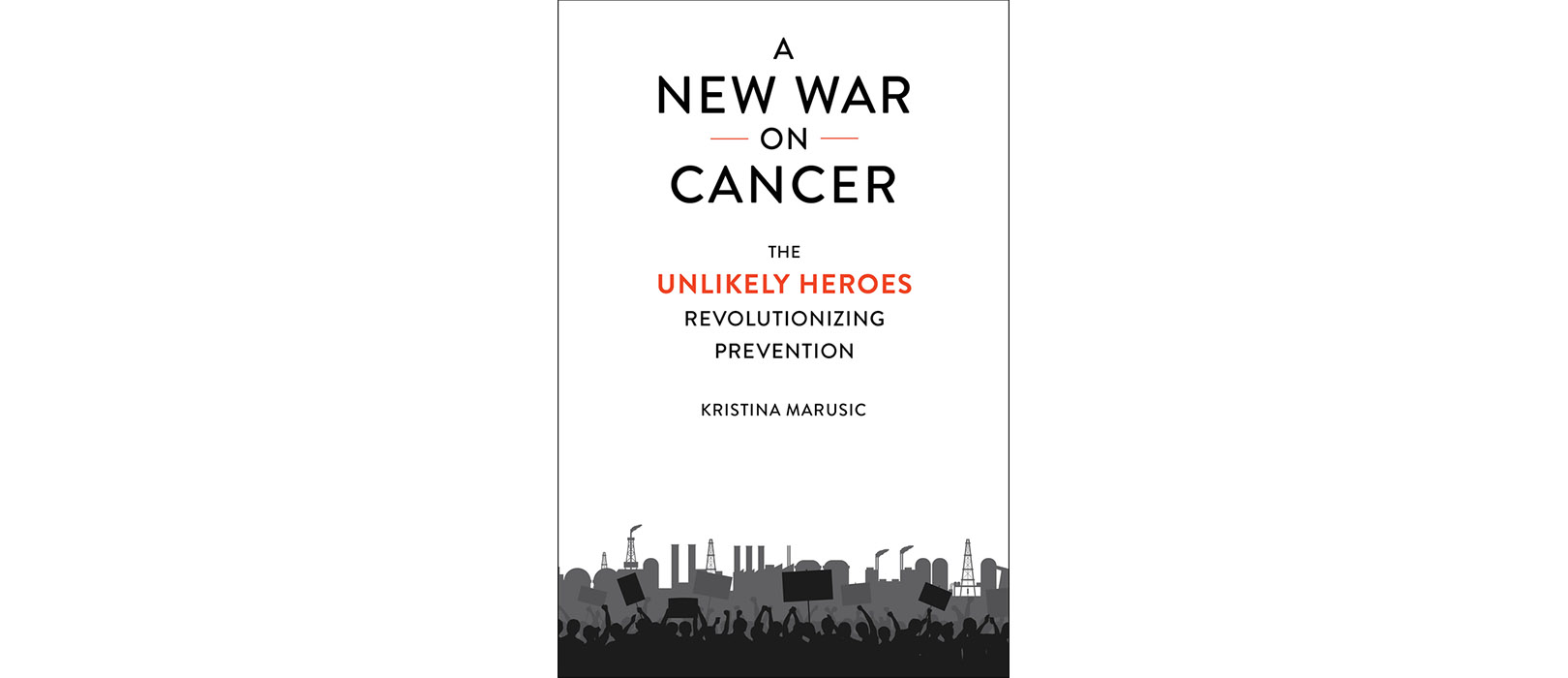
KRISTINA MARUSIC is an award-winning journalist at Environmental Health Sciences who covers environmental health and justice at EHN.org and DailyClimate.org. Her research into cancer-causing chemicals and exposures lead to her new book, A New War on Cancer: The Unlikely Heroes Revolutionizing Prevention (Island Press / May 11, 2023 / $28). Kristina holds an MFA in nonfiction writing from the University of San Francisco, and her personal essays and reporting have been published by outlets including CNN, Slate, Vice, Women’s Health, The Washington Post, MTV News, The Advocate, and Bustle, among others.
1. Goodson, William H., Leroy Lowe, Michael Gilbertson, and David O. Carpenter. “Testing the Low Dose Mixtures Hypothesis from the Halifax Project.” Reviews on Environmental Health 35 (4): 333–57. https://doi.org/10.1515/reveh-2020-0033.
2. De Falco, Maria, and Vincenza Laforgia. “Combined Effects of Different Endocrine-Disrupting Chemicals (EDCs) on Prostate Gland.” International Journal of Environmental Research and Public Health 18 (18): 9772. https://doi.org/10.3390/ijerph18189772.
3. Scsukova, Sona, Eva Rollerova, and Alzbeta Bujnakova Mlynarcikova. “Impact of Endocrine Disrupting Chemicals on Onset and Development of Female Reproductive Disorders and Hormone-Related Cancer.” Reproductive Biology 16 (4): 243–54. https://doi.org/10.1016/j.repbio.2016.09.001.
4. Susmann, Herbert P., Laurel A. Schaider, Kathryn M. Rodgers, and Ruthann A. Rudel. “Dietary Habits Related to Food Packaging and Population Exposure to PFASs” Environmental Health Perspectives Vol. 127, No. 10 https://doi.org/10.1289/EHP4092
5. https://www.ehn.org/pfas-in-pennsylvania-food-2639142267.html
6. https://www.ewg.org/tapwater/chemical-mixtures-may-interact-and-raise-cancer-risks.php
7. https://pubmed.ncbi.nlm.nih.gov/36430011/
8. https://www.theguardian.com/us-news/2019/may/22/chemicals-in-cosmetics-us-restricted-eu
9. https://www.chemistryworld.com/news/us-agencies-test-less-than-1-of-chemicals-/9220.article


