
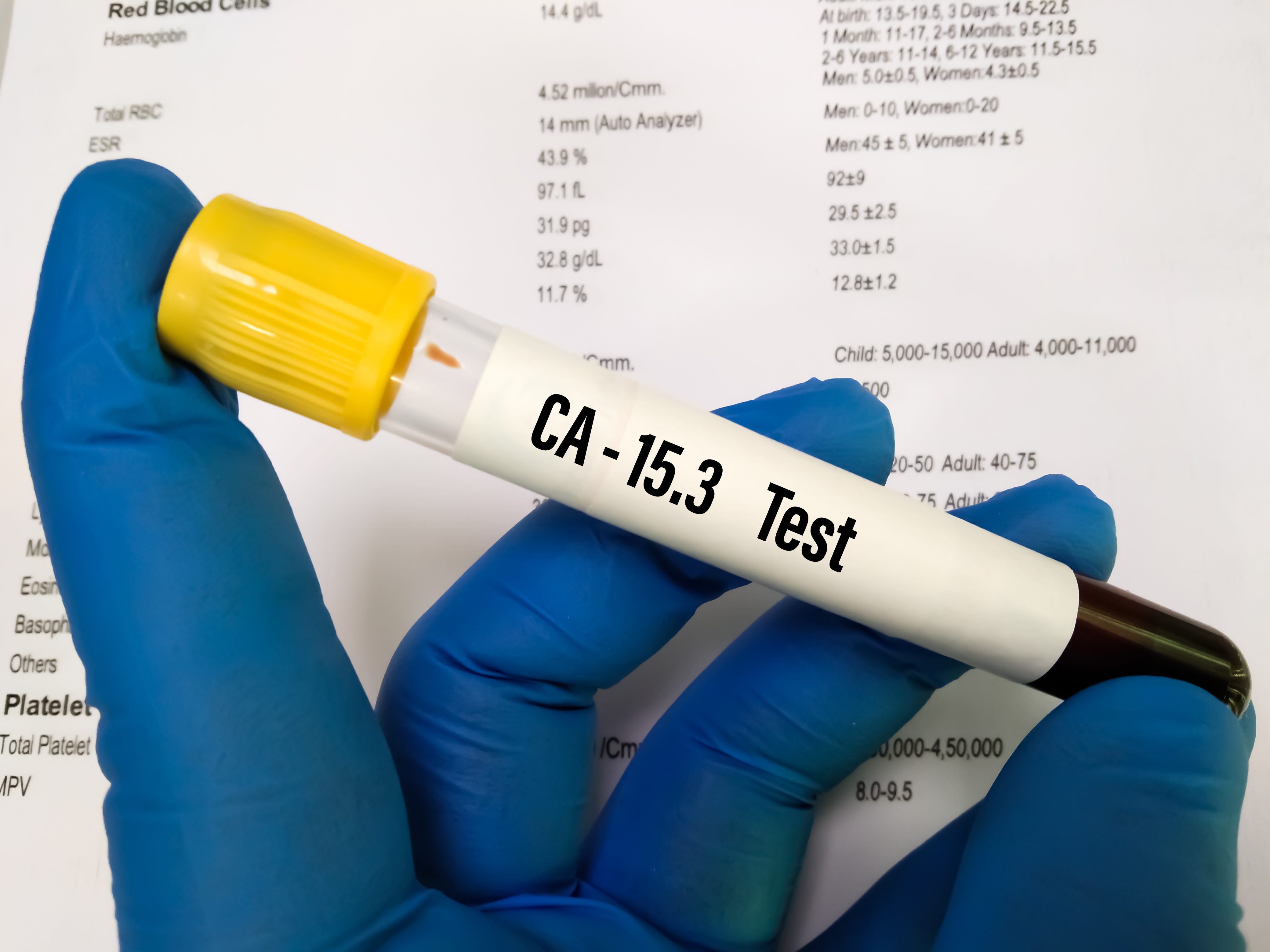
What is CA 15-3?
Cancer antigen 15-3, or CA 15-3, is a protein frequently over-expressed in breast cancer. CA 15-3 can be used to monitor response to breast cancer treatment and disease recurrence. The CA 15-3 is measured in the blood and the normal range is less than 30 U/mL. The CA 15-3 test is most often used for post breast cancer treatment surveillance and is likely to be replaced by ctDNA.
How common is CA 15-3 in breast cancer?
Early-stage breast cancers tend to have a low incidence of elevated CA 15-3 levels. More advanced and higher stage breast cancers are more likely to have elevated CA 15-3 levels as well as higher absolute levels. However, not all breast cancers express the CA 15-3 antigen, so this assay cannot detect all breast cancers.
How do oncologists use the CA 15-3 level?
Historically the main role for CA 15-3 has been in breast cancer treatment surveillance along with clinical evaluation and CT/PET scans. Rising levels may indicate a cancer recurrence sooner than PET/CT detection however this doesn’t necessarily translate into improved survival. Moreover, a high CA 15-3 level may occur falsely leading to significant anxiety and unnecessary tests to look for a recurrence that doesn’t exist.
What causes CA 15-3 blood levels to increase?
The most frequent cancer which causes an increased CA 15-3 is breast cancer. Benign conditions can also elevate CA 15-3 and many breast cancers are not associated with CA 15-3 at all.
Can CA 15-3 predict breast cancer recurrence?
Studies have shown that early recurrence of a breast cancer can be predicted by an average of 5-6 months prior to other signs or symptoms by CA 15-3. The benefit of post-treatment monitoring is controversial because studies have not shown that early detection of cancer by CA 15-3 leads to more effective therapy and an improvement in outcomes. Low sensitivity in early-stage breast cancer, low overall specificity, and lack of effective treatment when recurrences are detected are important limitations of the CA 15-3 assay.
Does CA 15-3 return to normal after the cancer is removed?
Most healthy people have CA 15-3 levels near normal between one and four months after a cancer has been successfully removed.
Can CA 15-3 be high without having cancer?
Yes, elevations in CA 15-3, CA 19-9 levels and other “markers” may occur in patients without cancer. In fact, studies suggest that falsely elevated levels may occur in up to 50% of cancer patients post treatment leading to unnecessary anxiety and testing.
Can CA 15-3 levels increase with chemotherapy treatment?
Yes, CA 15-3 “flares” during chemotherapy don’t mean the cancer is progressing. Cancer patients whose CA 15-3 blood tests rise at the beginning of chemotherapy and then fall (flare) do better than patients with a consistently rising CA 15-3.
Can CA 15-3 be used to diagnosis cancer?
There is currently insufficient data to recommend the use of CA 15-3 measurement for the screening, diagnosing, or staging of breast cancer. CA 15-3 levels are elevated infrequently in early-stage breast cancers and completely absent from other breast cancers, making the test unreliable for detecting early-stage cancers or those that do not express the antigen. CA 15-3 levels may also be increased in several benign and malignant conditions.


